New Local Group Offers Safe Space for Conversations About Depression and Anxiety

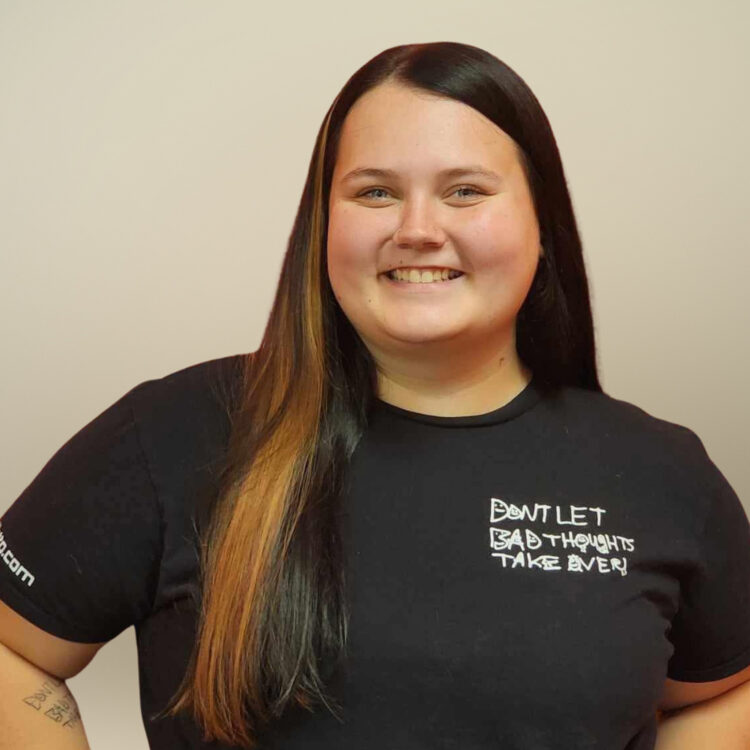
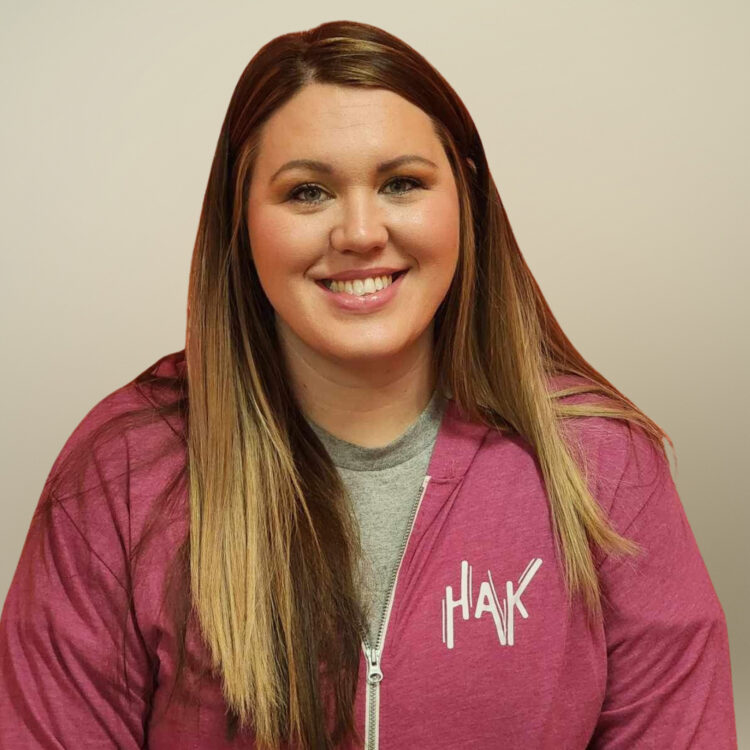


Excelsior Springs, Mo. – When a notecard pinned to a bedroom wall carried the words “Don’t Let Bad Thoughts Take Over,” it became more than just a message left behind after tragedy; it grew into a movement. Emily Ellis, founder and executive director of Don’t Let Bad Thoughts Take Over (DLBTTO), announced that a new mental health support group will launch at Excelsior Springs Community Center (ESCC) in September.
Ellis noted that in today’s age of digital communication, talking to others about depression and anxiety online can sometimes overshadow face-to-face interaction. DLBTTO’s mission is to change that, bringing people together for honest, in-person conversations about their mental health struggles.
According to Ellis, DLBTTO seeks to create a safe, welcoming space for those facing mental health challenges through monthly sessions. The meetings will focus on sharing personal experiences, connecting with others, and accessing helpful resources.
Through these sessions, Ellis and other DLBTTO board members hope to fill a critical gap in the community’s mental health support network. She explained that the idea for the group grew out of both personal tragedy and awareness of unmet needs for people who want help but don’t know where to start.
Ellis credited DLBTTO’s co-founder, Executive Director Erica Futch, with playing a pivotal role in establishing the nonprofit. The group began in Blue Springs, Mo., after Futch lost her sister, Haley Allyn Kelley, to suicide in 2022.
Ellis shared that Haley had struggled with depression, anxiety, and epilepsy. After her death, family members found a notecard pinned to her wall with a powerful message: “Don’t Let Bad Thoughts Take Over.” That phrase became the organization’s guiding light to help others who may also be struggling.
At first, the group focused on raising awareness and funds for suicide prevention. Each t-shirt they sold included Haley’s initials, with proceeds donated to the American Foundation for Suicide Prevention. As DLBTTO grew, however, Ellis and Futch realized that a more direct, personal approach was needed to reach people who might benefit from support.
“Just going to events and having a booth is not necessarily enough for the community,” Ellis said. “We wanted to be the middleman between those who need help and that next step for seeking therapy or seeing a psychiatrist.”
The support group is designed to be that “middle step,”a place for people who may not be ready or able to access professional services but still need someone to talk to or resources to guide them.
DLBTTO meetings in Excelsior Springs will begin on September 8 at the ESCC, scheduled for the second Monday of each month from 5 p.m. to 7 p.m. Each session will introduce a topic such as depression or anxiety, feature workbook-guided exercises, and allow time for open group discussion.
“At the end of each meeting, we’re going to have an open discussion where each participant will have the opportunity to talk for 15 minutes to share what is on their mind,” Ellis said. “It will be an opportunity to open up in front of others in an anonymous fashion.”
She emphasized that participant names will not be shared and that discussions will not be formal. “It’s going to be casual,” she said. “People can open up if they want to, but they don’t have to.”
The emphasis on anonymity and informality is deliberate, Ellis explained. The organization wants attendees to feel safe without pressure to share. Still, she added that a formal confidentiality policy is under discussion. For now, the rule is simple: what’s said in the group stays in the group.
“We just don’t want people to feel that they are locked into the group session with a contract,” Ellis said. “We just want people to feel comfortable and get the help they need.”
She also noted that many people continue to feel isolated in the aftermath of the COVID-19 pandemic.
“People don’t have conversations anymore,” Ellis said. “Many still haven’t fully reintegrated into society. There is a lot of fear about being in groups, and some people’s jobs never went back to in-person. We just want to start that conversation again—not over social media, not over the phone, but in person.”
Ellis emphasized that DLBTTO’s support group is open to anyone, regardless of background or severity of struggle. She explained that board members bring lived experience rather than psychiatric credentials, allowing them to connect with participants through empathy and shared challenges.
“It’s 100% from lived and life experience,” she said. “When my mother had a mental health crisis, I didn’t know what to do. Futch, who had been through it herself, helped me navigate my options. That’s why I, along with the rest of the board, am so passionate about this, because it hits home for us all.”
To further support participants, Ellis said each meeting will include a “mental health toolkit.” These toolkits will contain self-care items, resource lists, and practical exercises to help attendees continue their mental health journey outside of the group.
“If someone needs help, we just want to be able to hand them the resources they need or at least point them in the right direction,” Ellis said. “If we’ve helped even one person find the resources they need, or feel like they have been heard and helped, then we’ve done our job.”
As the group prepares for its first session at ESCC, Ellis expressed hope that the meetings will offer a simple but powerful step forward. For anyone who has the courage to walk through the door, sit down, and start a conversation, she believes that “something so simple can be so important” in helping someone find the support they need.
For more information about DLBTTO and its community mental health sessions, or to purchase apparel to support awareness, visit https://www.facebook.com/dlbtto/ or https://www.dlbtto.com/.
If you appreciate the value our local journalism brings to the community, please consider making a recurring contribution to the Excelsior Citizen!
While Goode and Harkins retained their seats on the Excelsior Springs School Board, the community dealt a setback to school funding by voting down a proposed levy. Click here for full Clay and Ray County election results from across dozens of municipal and school district races.

Desiree Byas, 24, the victim of the recent apartment fire on Excelsior Street, is currently in critical condition at a local hospital, her family has confirmed. Byas, who suffered significant lung damage due to smoke inhalation, is facing a challenging recovery period. “There is still a long road ahead, but the family is grateful for…

Kat McKown was a creator from a young age, naturally drawn to the arts she loved to draw and paint especially fashion. Her mother recognized her talent early in her life and felt like she might have a career in art. She submitted some of Kat’s work to an art academy via mail, and the…
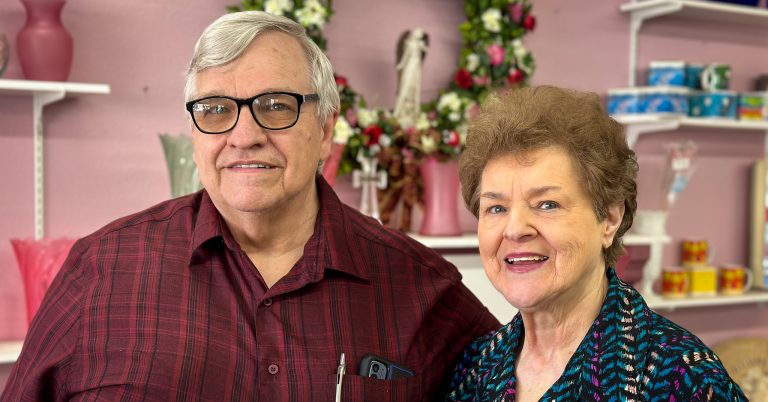
Excelsior Springs Floral and Gifts, owned by Marvin and Nancy Shepherd, has been in business since 1982. With a passion for flowers that started at a young age, Marvin has been in the flower business for 63 years. The couple has been married for 54 years and has spent those years working together to create…
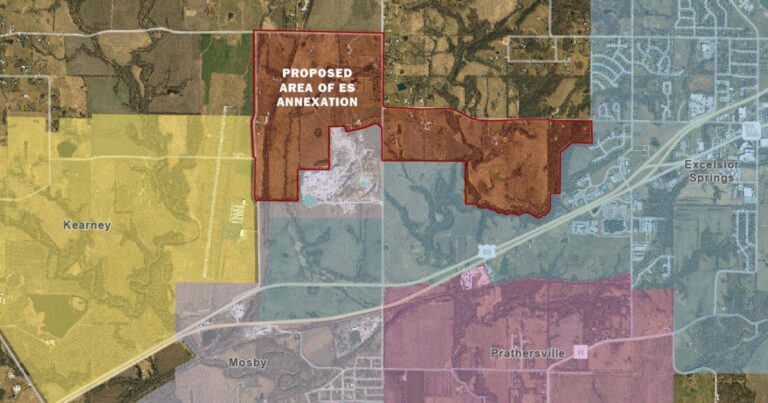
Residents are invited to attend a Public Forum on the Proposed Westside Annexation on Tuesday, October 28, from 6 to 8 p.m. at the Mid-Continent Public Library – Excelsior Springs. The event will feature an open discussion with City of Excelsior Springs officials and residents from the area proposed for annexation, offering an opportunity to…

March 8th, 2023 – A wrong-way driver on US 69 Highway and Rhodus Road, near the Midwest National Air Center and Pour Boy service station, caused a head-on collision resulting in one driver sustaining injuries. According to the crash report provided by the Clay County Sheriff’s Office, the accident happened around 12:52 pm when a…