Healthy Eating on a Budget: Smart Strategies for Families Facing Rising Food Costs




As food prices continue to climb and schedules grow busier, many families are finding it harder to maintain a healthy diet without breaking the bank. With Americans eating out an average of three times a month—and ordering takeout even more frequently, averaging 4.5 times per month—planning affordable meals at home has become more important than ever.
Fast food prices tell the story of inflation: an Egg McMuffin costs nearly 48% more today than it did before the pandemic, and Chick-fil-A meals are up by 89%. Meanwhile, families juggling school pick-ups, extracurriculars, and late work hours are left with less time to cook nutritious meals.
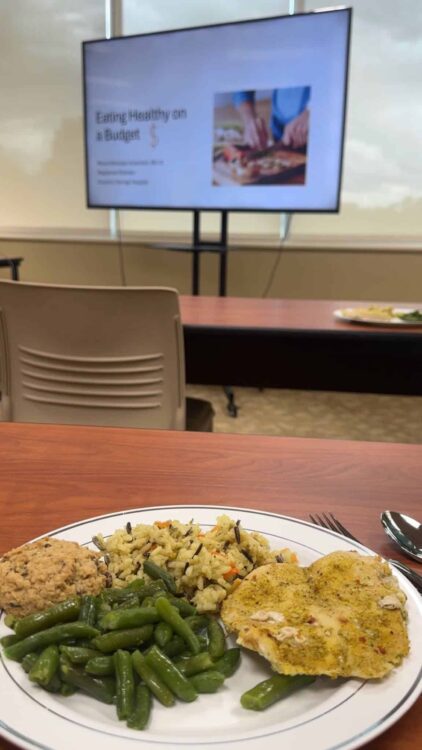
Registered Dietitian Maura J. Woolsey, RD, LD, encouraged families to start with a plan during her presentation for Thrive Excelsior’s Quarterly Lunch and Learn at Excelsior Springs Hospital last Wednesday, May 7, 2025. “Choose your main protein first, then build your meals with simple staples and sides,” she advises. Social media platforms like Pinterest, Instagram, and Facebook offer a wealth of budget-friendly recipe ideas, from batch-cooked casseroles to freezer-friendly soups and pastas.
Batch cooking meats in bulk can also stretch your dollar. “Season and use later,” Woolsey says. This strategy cuts down on prep time during the week while reducing waste.
Compare prices and know your stores. According to consumer studies, Aldi tops the list as the most cost-effective grocery store, followed by Walmart, Costco, and Sam’s Club. Buy in bulk when it makes sense—especially for staples like grains, frozen vegetables, and proteins that can be used across multiple meals.
Forget the old food pyramid. The USDA now recommends using the MyPlate model:
• Fruits: 2 cups/day
• Vegetables: 2.5 cups/day
• Grains: 3–6 ounces/day, a iming for at least half from whole grains
• Dairy: 3 servings/day of low-fat (1% or less) options
• Protein: 5–6.5 ounces/day from lean sources like poultry, wild game, seafood, beans, eggs, nuts, and seeds
Frozen and canned produce are just as nutritious as fresh options, and often more affordable. Look for items where the first ingredient is “whole grain” for optimal fiber and nutrients.
Woolsey also warns against hidden sodium and sugar. “The goal is to keep sodium under 2,300 mg a day—that’s about one teaspoon,” she explains. For added sugar, men should aim for no more than 36 grams daily (9 teaspoons), and women no more than 25 grams (6 teaspoons).
Artificial sweeteners like aspartame and stevia are generally safe but may trigger appetite in some individuals, so beverage choices should also be made thoughtfully.
Breakfast Ideas:
Oatmeal or overnight oats
Egg bites or smoothies with frozen fruit and yogurt
Ground turkey, cheese, egg, and bell pepper burritos
Mighty Muffins with fruit and veggies
Lunch Ideas:
Chicken stir fry with rice, peppers, and onions
Bento boxes with hard-boiled eggs, hummus, and cinnamon apples
Chicken salad with whole grain crackers, cucumbers, and melon
Stuffed shells with broccoli and mixed fruit
Dinner Ideas:
Pulled pork tacos with slaw
Salmon with kale and apple salad
Pork tenderloin with charred corn and tomatoes
Turkey chili with whole wheat bread
Looking to dig deeper? Check out these helpful sites:
You can also track your meals and nutrition with the MyFitnessPal app. Many health insurance plans now offer coverage for weight management programs with registered dietitians like Woolsey, especially for conditions like cardiovascular disease and diabetes.
With just a little planning and smart shopping, healthy eating doesn’t have to come with a high price tag. “It’s not about perfection—it’s about progress,” Woolsey reminds us. “Every healthy choice counts.”
If you appreciate the value our local journalism brings to the community, please consider making a recurring contribution to the Excelsior Citizen!

In Excelsior Springs, a dedicated assembly of over thirty healthcare and youth service professionals convene monthly under the banner of the ES SAFE (Substance-Abuse Free Environment) Committee.

After just three years in the Suburban Conference, Excelsior Springs is making another major move in high school athletics. The school board voted 5-1 on Feb. 11 to accept an invitation to the Midland Empire Conference, citing better competitive balance and postseason alignment, though some raised concerns about whether stepping away from larger suburban schools was the right long-term decision.

No raises in the new city budget (for now). But cutting the municipal court? That could save $206K a year.

November 21, 2022 – According to Excelsior Springs Fire Chief Joe Maddick, at 5:56 PM the Excelsior Springs Fire Department responded to a report of a residential structure fire with a victim trapped at 21 Dawn Ave. Upon arrival, firefighters found smoke and fire coming from the garage and basement area of the home. Firefighters…

A 2016 Dodge Charger SRT “Hellcat” was stolen from Heartland Chrysler, Dodge, Jeep, and Ram in Excelsior Springs on Monday, June 10, around 5:00 PM. The vehicle theft involved an armed suspect who managed to elude initial police pursuit and reach speeds of up to 169 mph during the getaway, according to the vehicle’s monitoring system.

Locations in and around Excelsior Springs turned into an unlikely hotspot when Impractical Jokers star James “Murr” Murray was spotted at a local Casey’s gas station, sparking curiosity about his sudden presence. As it turns out, Murray wasn’t just passing through—he was preparing to film his new horror movie, Don’t Move, bringing Hollywood excitement and a touch of terror to Excelsior Springs.