Inside Wyman School: What Remains and What Comes Next



The reporting for this article was informed by research assistance and archival materials provided by the Clay County Archives & Historical Museum and the Excelsior Springs Museum & Archives. Their support in sourcing and verifying historical records is gratefully acknowledged.
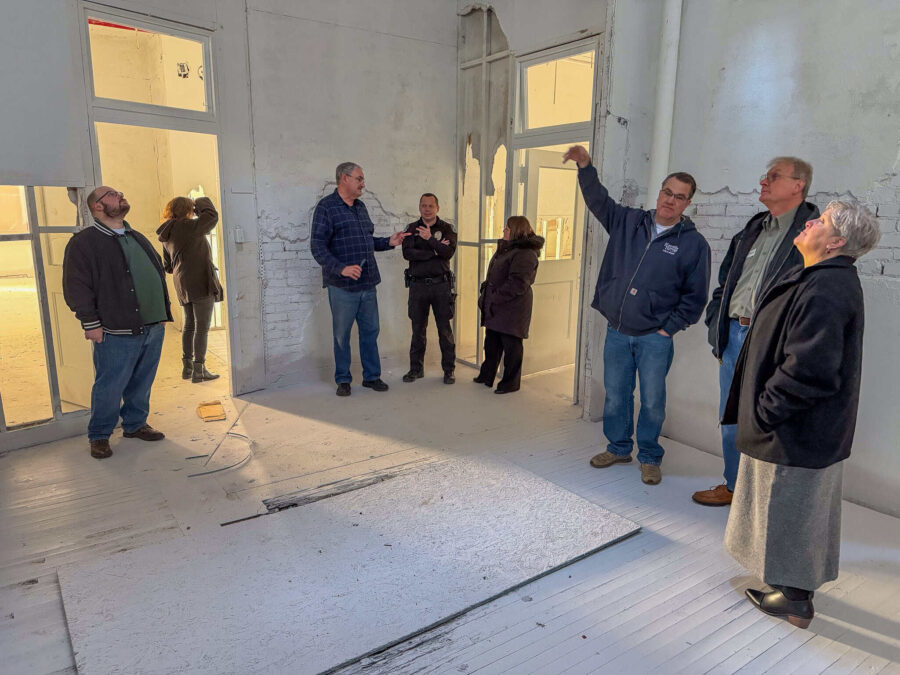
EXCELSIOR SPRINGS, Mo. – If you drive past the former Wyman School today, it is easy to assume nothing is happening there. The windows are boarded. The doors are locked. From the outside, the building looks much as it has for years. However, change has been in the works for some time, and the inside has finally seen some progress. City officials have recently toured the property, and were able to reflect on history and wonder what it will become next. And now, the community has an opportunity for an exclusive look inside to see its progress.
Over the winter months, crews completed environmental remediation inside the former school, removing asbestos and lead-based paint. With that work finished, the City of Excelsior Springs has taken a formal step toward determining what may come next for a building that has served as a historical benchmark of education for the city.
Public education in Excelsior Springs did not begin with a permanent schoolhouse. In the early 1880s, before Wyman existed, classes were held wherever space could be found. According to accounts published in The Fluoroscope of 1904, the Wyman School yearbook, early instruction took place in private homes and later in, “the Snyder building”.
More formal education did not take shape until the Excelsior Springs Company, founded by Henry Fish, donated land for what would become the community’s first permanent school building and named the new school in honor of town founder Anthony W. Wyman.. That decision marked an important shift, giving structure to a growing commitment to education.
Letha Findley captured those early efforts in the 1904 The Fluoroscope, writing that planks, balanced across chairs, served as desks and tables. Eventually, classes moved from the Snyder building into a church, where, Findley recalled, “each grade was separated by a thin calico curtain.”
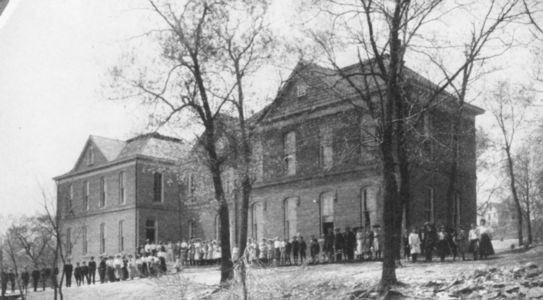
The original Wyman School was constructed in 1886 by a Mr. Boyer as a four-room, wood-frame building intended for public elementary education. According to The Fluoroscope, the school’s leadership included “Dr. J.J. Gaines, the first superintendent,” along with the original school board members J.W. Henrie, J.W. Huey, and J.W. Snapp.
Two years later, in 1888, Wyman School celebrated its first graduating class. Just four students completed the program: Miss Mollie McGlothlin, Miss Mae Weston, W.D. Flack, and Fred H. Dice. Their studies included “arithmetic, languages, reading, spelling, history, writing, drawing, and music,” Findley noted.
The school continued to grow. In 1890, an addition was built to allow for more advanced coursework. Records show that Professor B. Riggs was appointed superintendent that year, and the teaching staff expanded as enrollment increased.
By 1903, seventy-four students had graduated from Wyman High School. In 1904, the school was formally recognized as a “second-class institution,” according to Findley.
That same year, the Excelsior Springs Daily Call reported major improvements to the building, including two additional stories, a basement, and updated plumbing and lighting. The newspaper noted that the expansion was designed to match the original structure, using brick that corresponded with the existing building.
In March 1905, a State University examiner visited Wyman High School as part of the articulation process. “He inspected the classes, laboratory, and library and was well pleased with the school,” Findley wrote. Later that week, Assistant State Inspector of Schools Mr. Emberson also visited and approved the institution. Together, they concluded that “the Excelsior Springs High School is now on the approved list as a first-class high school,” as reported in The Fluoroscope.
That designation allowed Wyman graduates to attend colleges and universities within the Missouri College Union and across the Midwest without additional entrance examinations.
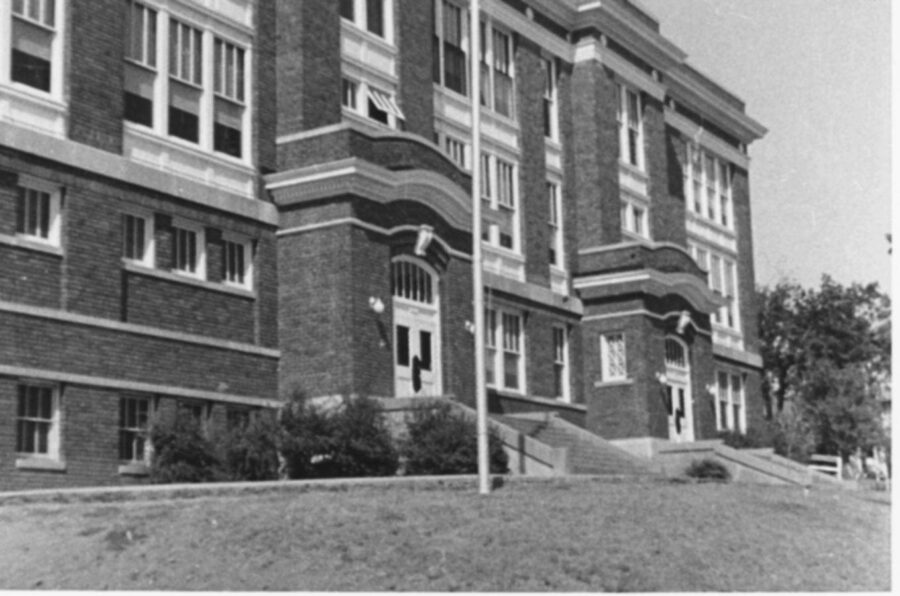
By 1916, after years of additions and upgrades, the Excelsior Springs Standard declared that the community had “one of the most complete and fully equipped high school buildings in the state of Missouri,” placing the property’s value at $65,000 (nearly $2 million today).
By the late 1920s, continued population growth and rising enrollment led to another change. A new Excelsior Springs High School was built on the south edge of town, and the high school students moved into the new building in January 1930. Wyman became solely an elementary school.
By 1930, the newspaper described the old building as having “faithfully served as a seat of learning” but showing “the wear and tear of trudging childish feet,” with floors and stairs “scarred” and desks marked by the “initials” of students. The article also noted that Miss Anna Morgan, a sixth-grade teacher at Wyman school, had received many letters from former faculty members and students,.
In that Sunday edition, Dr. J. J. Gaines, identified as Wyman’s first principal, wrote a poem about the demolition of the original schoolhouse built in 1886. Under the heading “By Its First Principal,” he described the scene in passionate terms:
“We hear the crowbar’s vicious thrust, We note the timber’s fall; We watch the mantling cloud of dust That dims the fated wall; Slowly the friendly outlines fade, So sacred… memory-gemmed— The verdict signed—the contract made— The WYMAN falls—condemned!”
Exerpt of poem by Dr. J.J. Gaines
Wyman’s story did not end with the demolition of just the old schoolhouse on Dunbar Ave. The building that most residents recognize today later served as a public school for decades more, before closing permanently in the early 1990s.
After that closure, Wyman entered a long period of uncertainty. The school district stopped using the building, and it was rented for a time by community organizations, including a community theater. An out-of-town developer later proposed converting the building into condominiums, with one unit per floor, but the project was never carried out. The property eventually went to tax sale.
In late 2016 or early 2017, the City of Excelsior Springs purchased the building, bringing it back under public ownership.
According to Melinda Mehaffy, the city acquired Wyman to ensure that decisions about its future would be made intentionally.
One challenge was unavoidable. Asbestos and lead-based paint were present throughout the building. Whether the structure were to be demolished or reused, remediation would be required.
The city secured a $250,000 Environmental Issues Emergency Response Assistance grant, known as an EI-ERA grant, to fund the abatement. The grant required no local match.
Remediation work took place over the winter months in late 2025. In January 2026, the city received confirmation that testing requirements had been met.
With that work complete, the city issued a request for proposals inviting developers and investors to submit ideas for the building’s reuse. Proposals are due March 17.
“We believe it’s going to be some type of housing, but we don’t know that for sure,” Mehaffy said. “Developers will bring us their projects and tell us what they think the project should be.”
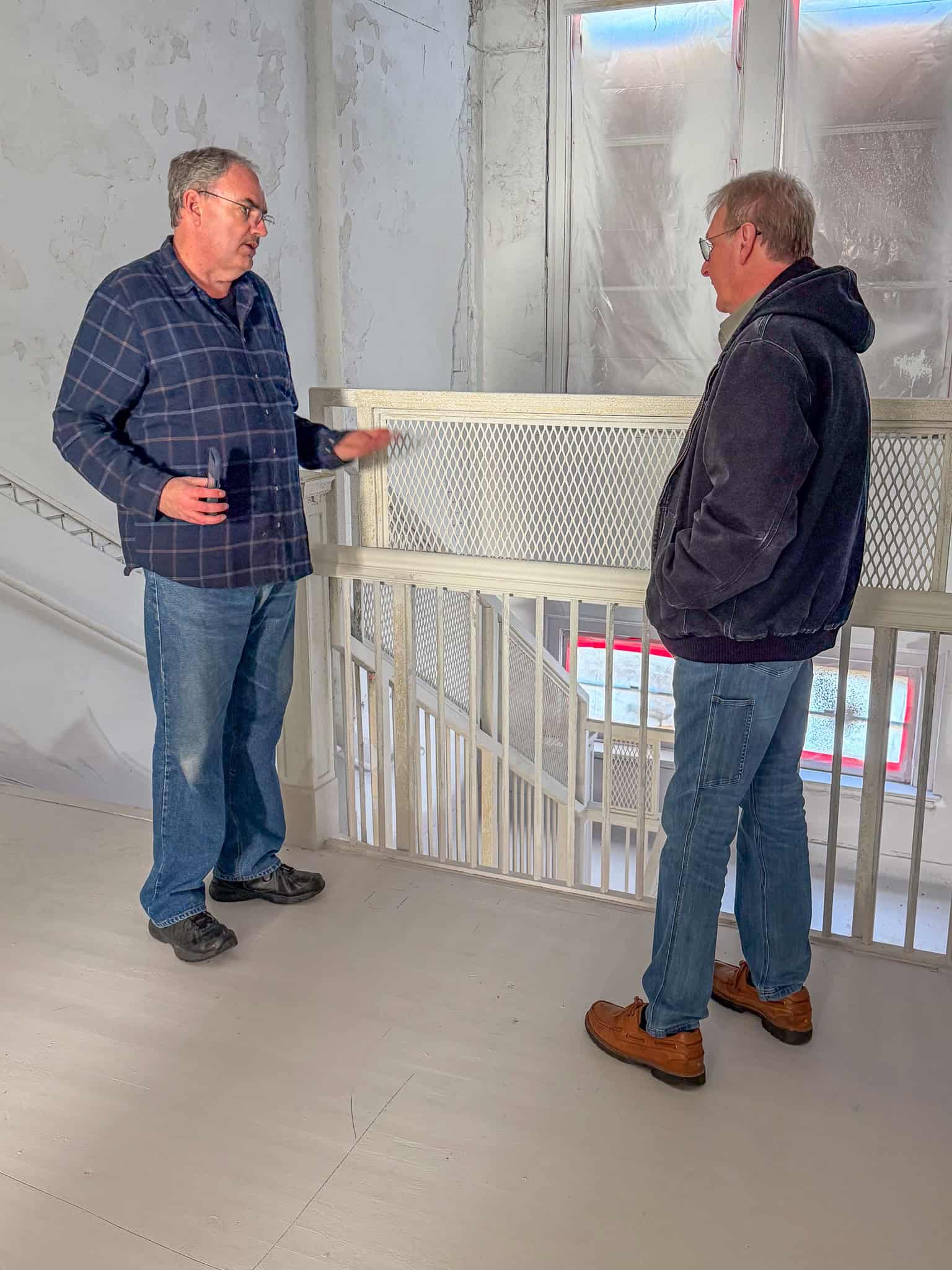
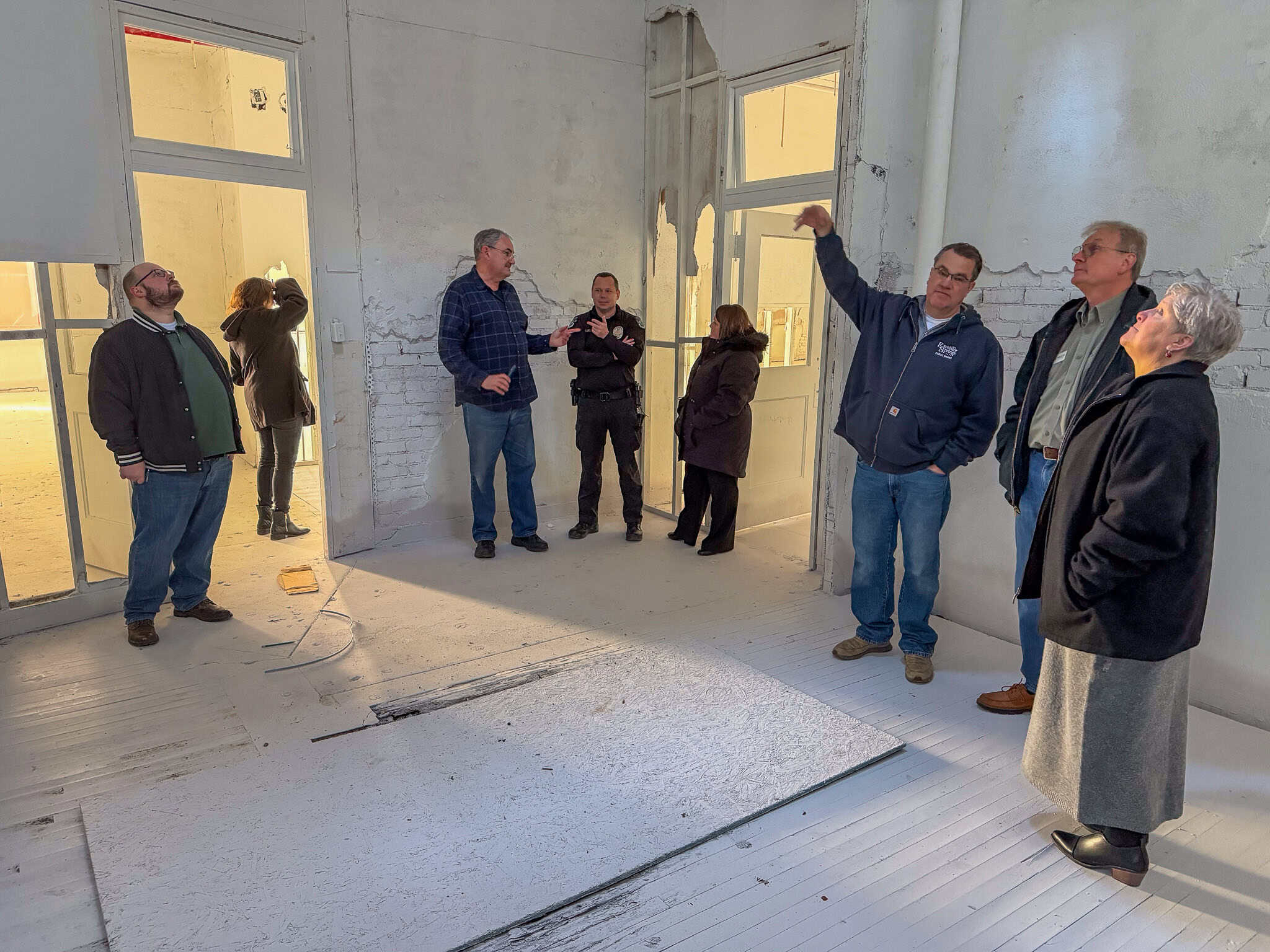
While the city reviews proposals, Wyman remains closed to the public. The property is monitored, and trespassing laws are enforced. Recently, city officials were able to take a detailed tour inside to view the progress after remediation. For those who once attended school there, the building is not just a project site.
Among those touring was Councilman Reggie St. John, who attended Wyman School from kindergarten through sixth grade. Walking through the building that day, he said the experience brought back memories of classmates, teachers, and events that unfolded inside its walls.
“It’s a memory overload from the standpoint of all the kids I went to school with here,” St. John said. “The significant events.”
Seeing the building vacant now brought mixed feelings.
“It’s sad to see it like this,” St. John said. “But it’s also great that we’re talking about doing something with it.”
Wyman stands in a familiar position in Excelsior Springs history: between what it has been and what it might become next. Since the late 19th century, the town has watched education and the Wyman building go through many chapters. Around a century and a half later, the city is again doing the work to fulfill a vision for a better city.
If you appreciate the value our local journalism brings to the community, please consider making a recurring contribution to the Excelsior Citizen!
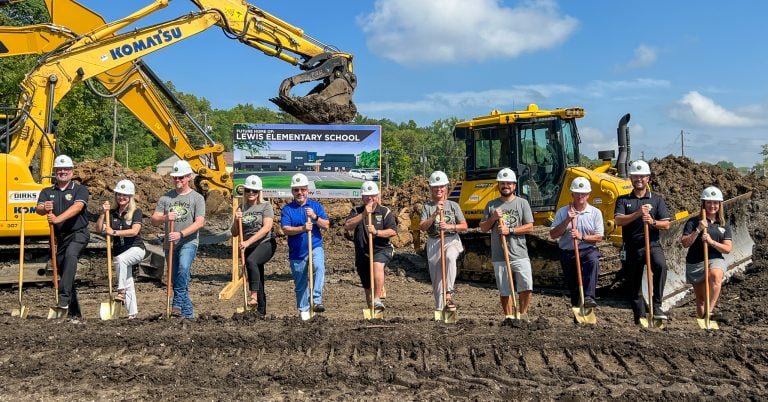
Shovels at the ready (photos by Courtney and S Jason Cole). August 21, 2023 – Despite soaring temperatures that reached a scorching 90 degrees by 11 am, a resolute crowd gathered to witness a momentous occasion—the official groundbreaking ceremony for the eagerly anticipated Lewis Elementary School in downtown Excelsior Springs. The event, held Monday morning,…

Arrest report and fire runs for the week of 10/6/21.

The Tiger wrestling team opened its season with a hard-fought dual against Winnetonka on Dec. 9. A late rally pulled the Tigers within striking distance, but the Griffins held on for a 41-37 win.

As the fall approaches, bowling enthusiasts in Excelsior Springs are gearing up for an exciting lineup of leagues at the beloved Tiger Bowl located in the Y Shopping Center, 1729 W Jesse James Rd. The season kicks off shortly after Labor Day, promising competitive fun for bowlers of all ages and skill levels. For those…

A life-long Excelsiorite, Tray Harkins is known as one of the most trusted individuals in the community. A 1987 graduate of Excelsior Springs High School he’s lived in Excelsior Springs for 54 years. A straight shooter with a sharp wit, Tray is a valued member of a number of organizations throughout the community. He has…

Police blotter, Fire Calls, and EMS Runs for Excelsior Springs, Missouri, as well as Clay County Sheriff, Ray County Sheriff, and Missouri State Highway Patrol, reports for July 28, 2023. Remember, all parties are innocent until proven guilty. Excelsior Springs Police Adult Arrest Report Excelsior Springs Fire & EMS Runs Clay County Sheriff’s Report No…