From Fire to Fame: The Remarkable Resilience of The Elms Hotel




Excelsior Springs began as a boomtown fueled by the popularity of mineral water. Among the many businesses that sprang up was the iconic Elms Hotel, which brought with it a story as rich and layered as the healing waters that made the town famous.
According to promotional brochures from the 1990s found at the Excelsior Springs Museum and Archives, the idea for The Elms originated with a group of Kansas City businessmen who saw promise in the mineral water craze. They established the Excelsior Springs Town Company (ESTC), led by five original shareholders: Howard M. Holden, Joseph S. Chick, L.R. Moore, S.F. Scott, and E.L. Martin.
Shortly after forming, the ESTC acquired 900 acres with the intent to build a luxurious resort—one that would offer visitors a grand alternative to the boarding houses of the time. Their vision materialized with the construction of the first Elms Hotel, which opened on June 29, 1888. Built from locally sourced wood, the hotel boasted over 200 guest rooms and included spacious verandas stretching 300 feet long and 176 feet wide on each side.
Guests were greeted by two sets of double doors, leading into a lobby flanked by large terra cotta fireplaces. A wooden grand staircase served as the centerpiece of the lower level, climbing to the upper floors. In 1889, the hotel was expanded with an additional 75 rooms on the north side.
Modern for its time, The Elms featured electric lights that illuminated the walkways at night. The resort also embraced the mineral water trend with spa amenities that included sulpho-saline baths and a temperature-controlled mineral pool known as the “marble plunge.”
But just ten years later, tragedy struck. On May 9, 1898, a fire broke out at 2:30 a.m., reducing the grand structure to ashes. The Kansas City Star reported, “No one was hurt though, few saved their baggage and many lost jewels and money.”
The Elms remained a memory for the next decade, until 1908, when a second hotel was built on the current site at the end of Elms Boulevard. But misfortune struck again—this second iteration burned down just nine months after opening.
Not to be deterred, a new group of investors came together to build a third and final version of The Elms. The Elms Realty Company, which included Issie J. Ringolsky, Edwin J. Becker, M.F. Ringolsky, and B. Van de Gre, purchased the land.
Determined to avoid the fate of its predecessors, the new structure was designed to be “The Fireproof Elms.” A postcard signed by Swenson Construction Company and Kansas City architects Jackson and McIlvain promised a building made of steel framing, reinforced concrete, and native limestone.
When the third Elms Hotel opened to the public on September 7, 1912, it was once again a grand destination, offering mineral spa treatments, sweeping ballrooms, and iconic verandas.
During the 1920s, the hotel reached new levels of fame as a national health resort. But it also became known for less wholesome activities during Prohibition. According to the Martin City Telegraph, “backstairs raids led to the arrest of operators running gambling salons.” Infamous gangsters like Al Capone, “Pretty Boy” Floyd, and Bugsy Moran reportedly hosted illegal gambling events and gin parties within its walls.
In 1922, the Elms Realty Company sold the property to Dr. A.S. McCleary, who operated a Kansas City sanitarium and later opened the McCleary Clinic in Excelsior Springs. The hotel was eventually sold again to the Roberts Hotel Company of Chicago.
By the 1930s, the American Medical Association was questioning the medical claims surrounding mineral water. Combined with the economic impact of the Great Depression, the hotel faced bankruptcy in 1931.
Fortunately, the Eppley Hotel Company stepped in to purchase the hotel, reviving its image and reestablishing it as a luxury destination. Among the many notable guests who stayed at the Elms was President Harry S. Truman. According to hotel brochures, Truman checked in on November 2, 1948—Election Day—seeking a brief respite from the national spotlight.
He told the Kansas City Star he enjoyed “one of their hot spring baths,” followed by a ham and cheese sandwich and a glass of buttermilk at 6:30 p.m. He turned in early, only to awaken later and tune into the radio. It was from his room at the Elms that Truman learned he had won the presidency.
In the decades that followed, the hotel changed ownership multiple times. During the 1950s and ’60s, it was sold to the Sheraton Corporation of America, then to the Fields Hotel Corporation. EBNA notes that by 1960, the hotel was once again in bankruptcy. It was repurchased briefly by Sheraton before being sold in 1971 to Gotham Hotels of New York—allegedly as a tax write-off.
Excelsior Springs officials made a trip to New York to urge the company to restore and reopen the beloved hotel. Eventually, in 1973, a group of local investors purchased the property with plans to return it to its former glory. Unfortunately, their funding fell short, and the Elms was placed up for auction in 1976.
That’s when Robert and Carol Bisbee stepped in and purchased the property. After renovations, they reopened The Elms in 1977. Though the famed mineral waters no longer flowed through the building, updated amenities included hot baths and a new oval-shaped swimming pool in the basement—a feature still available to guests today.
In 1982, the hotel was sold to Elms Hotel Associates, who converted part of the property into time-share apartments. They also partnered with the city to create the Elms Redevelopment Corporation, but eventually filed for bankruptcy. The surrounding homes fell into foreclosure, and the hotel passed through several more owners.
Despite the ups and downs, the Elms remains a pillar of the Excelsior Springs community and continues to stand tall on the National Register of Historic Places. The hotel has long played host to community events, including the beloved Easter Sunday Celebration that began in 1984. As chronicled in the hotel’s newsletter, The Village Voice, children would search the grounds for candy-filled eggs—some containing special prizes—while enjoying carriage rides and visits from the Easter Bunny.
This spring, new General Manager Duke Christopher announced the return of the “Grand Easter Egg Hunt,” once again connecting the hotel to the local community and its traditions. The event will take place Sunday, April 20, from 11 a.m. to 2 p.m. for children under 18. Adults can join in the Easter festivities from 4 p.m. to 5 p.m.
The event will feature brunch, live music, and photo ops with the Easter Bunny. Entry to the egg hunt is $10 per person, and children under 4 are admitted free. Each participant will be guided on how many eggs they can collect—some of which will contain grand prizes such as hotel getaways and spa services.
For more information on the historic Elms Hotel and Spa or to register for the Grand Easter Egg Hunt, visit https://www.elmshotelandspa.com/the-elms-experience.htm.
Special thanks to the Excelsior Springs Museum and Archives for providing valuable historical resources and research assistance that helped bring this story to life. Their preservation efforts continue to keep the rich history of our community accessible to all. To learn more, visit esmuseum.com.
If you appreciate the value our local journalism brings to the community, please consider making a recurring contribution to the Excelsior Citizen!

Over the past year there has been a group of citizens testing out a new opportunity for Excelsior Springs citizens and those working here. The Thrive Excelsior Citizens Leadership Academy is designed to help participants understand local systems of government, health and wellness, education, housing and the economy, as well as strengthen their individual leadership…

According to Kansas City’s Fox 4 News, an allegation of abuse has been made against an Excelsior Springs Cornerstone Elementary school teacher. In their reporting, Fox 4 stated, “The school district said it is aware of allegations that the teacher may have restrained a 10-year-old student and also sprayed the child with apple cider vinegar.”…
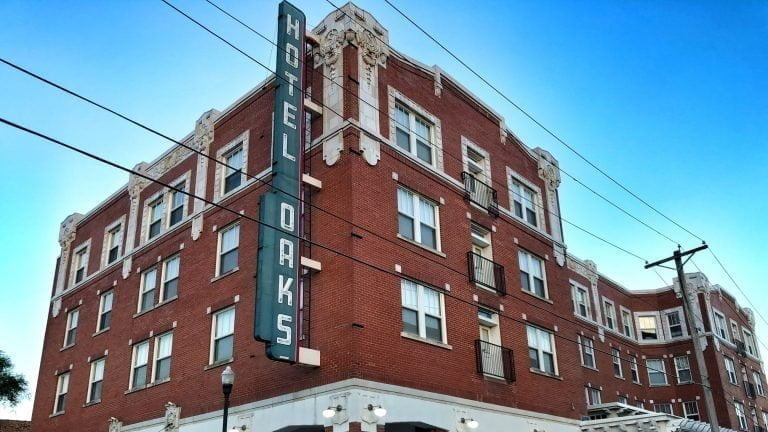
Two housing properties in downtown Excelsior Springs will soon begin transitioning from fixed-income or low-income rates to market rates impacting more than 50 residents. The Oaks Apartments and Downtown Villas were both constructed using Low-Income Housing Tax Credits (LIHTC). Those credits will soon be expiring allowing the owner of the properties to begin incremental rate…

The following are news headlines regarding Excelsior Springs that have been published throughout the week. Health staff says discussing suicide life-saving measure – Excelsior Springs StandardEXCELSIOR SPRINGS – During September, National Suicide Prevention and Awareness Month, Excelsior Springs Hospital’s Senior Life Solutions is working to raise awareness and educate the community on risk factors and…

The back patio of the Excelsior Springs Museum officially opened on June 26—adding not just a new place to sit, but a new way to experience the town’s history.

Excelsior Springs High School alumni are gearing up for a nostalgic Homecoming weekend, with milestone reunions planned for the Classes of 1974 and 1979.