Chavez Opens Watkins Mill’s Summer Educational Series with Santa Fe Trail Talk
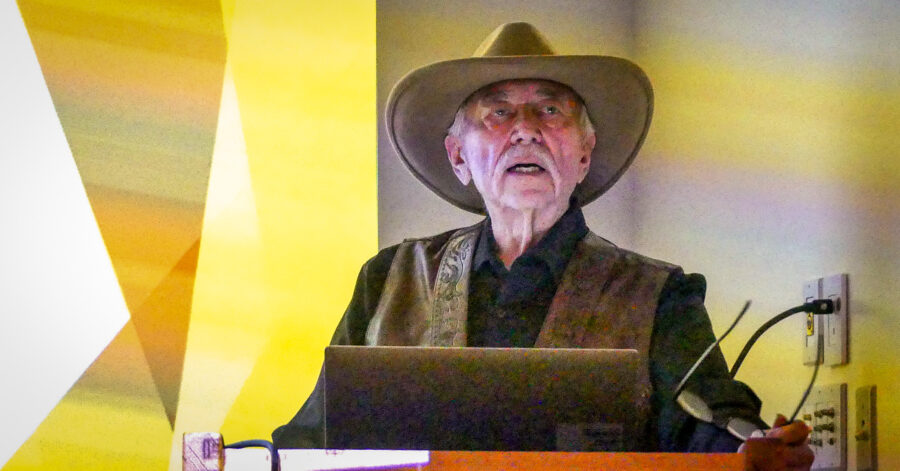
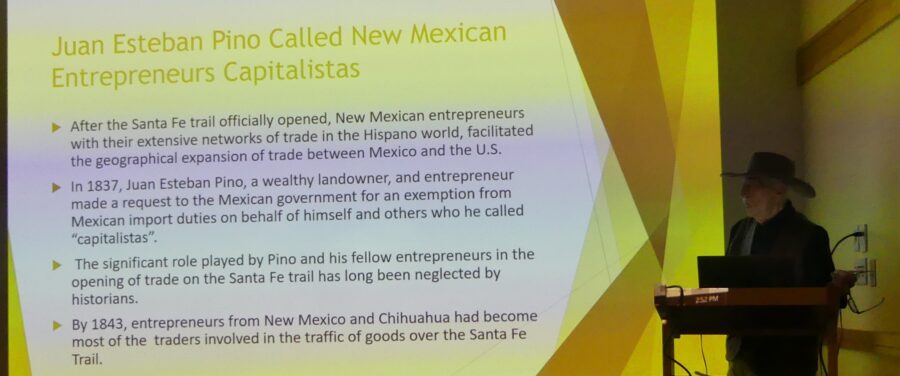


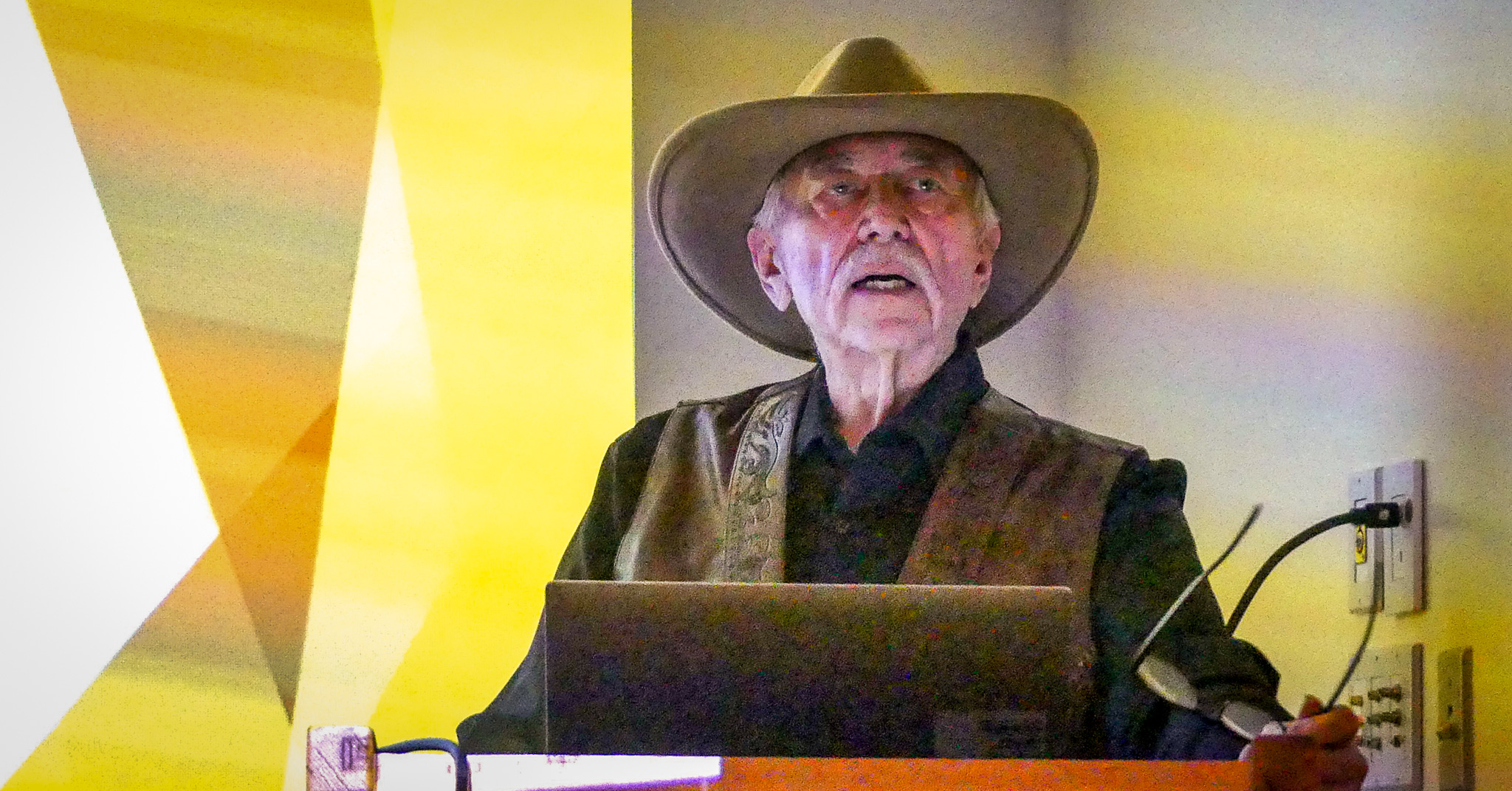
Lawson, Mo. – Watkins Woolen Mill State Park recently welcomed Dr. Genovevo T. Chavez Ortiz as part of its free interpretive programming for the community. Dr. Chavez presented a talk titled The Hispanic Capitalist of the Santa Fe Trail—or as he described it, El Hispano Capitalista del Camino de Santa Fe.
A historian and community activist with roots in northern New Mexico and southern Colorado, Dr. Chavez is known for documenting the life experiences of Mexican and other immigrant communities throughout the Midwest. He has curated an oral history initiative for the Kansas City Museum and contributed to the Kansas City Public Library’s Digital Encyclopedia Project, which aims to create a Kansas City-focused oral history website.
At Watkins Woolen Mill, Dr. Chavez guided guests through the history of the Santa Fe Trail, which was established in 1821, the year Missouri officially became a state. He explained that Spain, a mercantile empire, had long discouraged trade with the United States out of fear of losing control to monopolies. But on September 27, 1821, Mexico gained its independence from Spain and, as the newly formed Empire of Mexico, welcomed trade with neighboring countries.
During this pivotal time, William Becknell became the first Missourian to reach Santa Fe, New Mexico. When he returned home, he brought back sacks of silver, signaling the start of a new economic connection between the regions.
“The need was for a commercial route where entrepreneurs could carry trade into Latin America,” Dr. Chavez said. That need gave rise to the Santa Fe Trail, which became a critical trade route for exchanging goods such as textiles, wool, and agricultural products.
But commerce along the corridor didn’t begin in 1821. Dr. Chavez noted that Plains and Pueblo Indians had been trading along similar paths as far back as 1541, when Spanish explorer Francisco Vázquez de Coronado encountered the Quivira River—now known as the Kansas River. Other early travelers included the French Mallet brothers in 1737, explorers Jean de Alari, Pierre Satren, and Pedro Vial in 1782, and one of the most well-known figures, Juan Lucero—a New Mexican who made at least thirteen trips along what became the Santa Fe Trail between 1790 and 1821.
“For thousands of years, Indigenous people across the West had their own trade routes leading south,” Dr. Chavez said. “When Spain colonized Mexico, those trails began redirecting into new Spanish economic centers—towns and haciendas that became hubs of cultural exchange and commerce.”
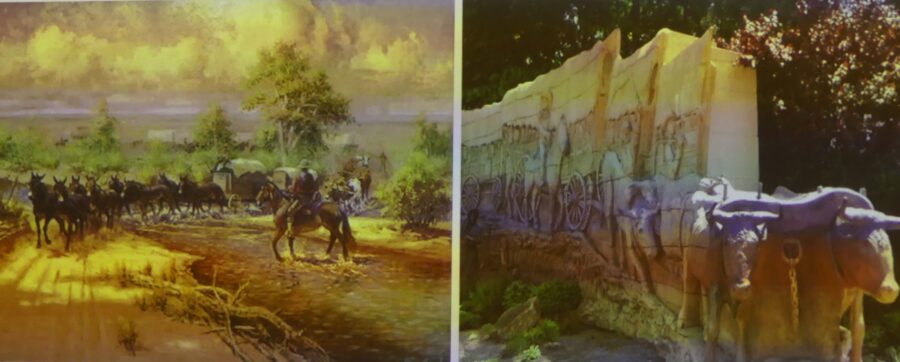
Unlike other westward trails that encouraged migration and settlement, the Santa Fe Trail was, at its core, a commercial highway. “The Santa Fe Trail wasn’t really an immigrant trail,” Dr. Chavez explained. “It was a trade route.”
He described how Spain’s economic system relied on large land grants and production taxes to support powerful haciendas—Spanish colonial estates focused on farming and trade. These estates, often owned by single families, produced tallow, cotton, vegetables, and other goods not only for trade but also to support surrounding communities. “They were crucial in supplying goods and creating commercial networks along the trade routes,” he said. “They established systems for distributing goods overland, allowing for extensive trade between regions.”
Along the Santa Fe Trail, a variety of trade items flowed in both directions. Mexico supplied hard currency, precious metals, jewelry, horses, cattle, sheep, wool products, and mules. In return, the United States contributed manufactured goods such as cloth, buttons, needles, tools, dishes, glassware, and cooking vessels.
As time passed, however, the landscape of trade shifted. “By the end of the Civil War in 1865, the railroad was pushing westward,” Dr. Chavez said. “It gradually shortened and eventually replaced the Santa Fe Trail.”
Yet the trail remains more than a historic path. “It wasn’t just a route—it was a bridge between cultures, economies, and nations,” Dr. Chavez concluded. “It reflects the story of two nations built on commerce and determination.”
For a full list of upcoming educational events at Watkins Woolen Mill—including the next guest speaker, Jeffery Smith, who will discuss Moses Dickson and the African American Fight for Equality in the Gilded Age of Missouri on June 14 at 2 p.m.—visit https://mostateparks.com/events/park/watkins-mill-state-park.
If you appreciate the value our local journalism brings to the community, please consider making a recurring contribution to the Excelsior Citizen!

The Excelsior Springs Community Center’s Special Projects Coordinator Jesse Hall sent an update on the work that is being done to expand the center with construction of an outdoor, competition sized swimming pool. In addition to this expansion, Century Lake had to be dredged in order for rain runoff not to flood downstream areas. Hall…
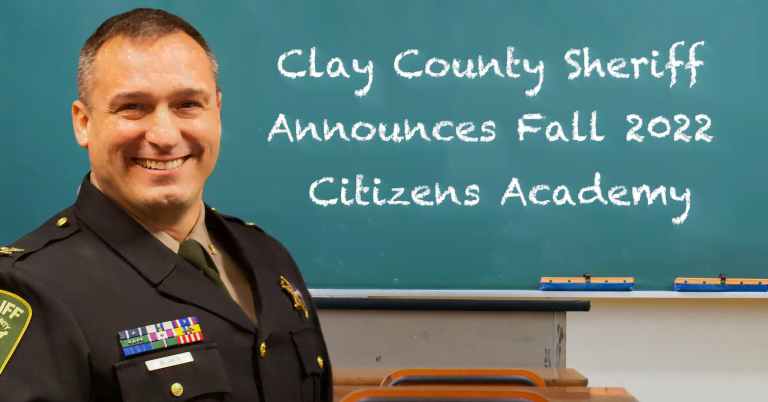
Sheriff Will Akin is pleased to announce that the Clay County Sheriff’s Office Citizens Academy is returning this fall, and residents now can apply online. The Citizens Academy provides information about the daily operations of the Sheriff’s Office and increases rapport with the public to better inform or dispel any misinformation through an educational process. The…

Here are some news headlines that you may have missed over the past two weeks, collected and collated from a variety of news sources, all pertaining to Excelsior Springs.

From leaving a bag of treats on a neighbor’s doorknob to joining the Mayor’s Block Party Challenge, Excelsior Springs is encouraging residents to celebrate National Good Neighbor Day by strengthening ties that make neighborhoods safer and friendlier.

The last year has been a little strange, as we have navigated the world around us with constant reminders of a virus that has changed what we knew as normal. We have been fortunate in Excelsior Springs to have a hotel that has remained open, bringing tourists to town to participate in our events and…

July 11, 2023 – The Excelsior Springs Board of Education convened on July 11, 2023, to discuss various updates and initiatives concerning the upcoming academic year. Here is a summary of the key points discussed during the meeting: 2023-24 Convocation: Dr. Jaret Tomlinson provided an update on the August 18th convocation, revealing that the event…