Buried Truths: How Cemeteries Reveal America’s History of Segregation
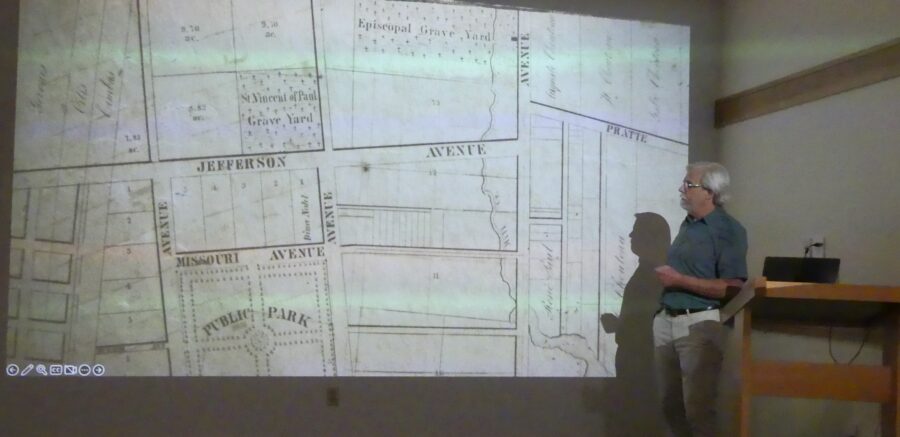
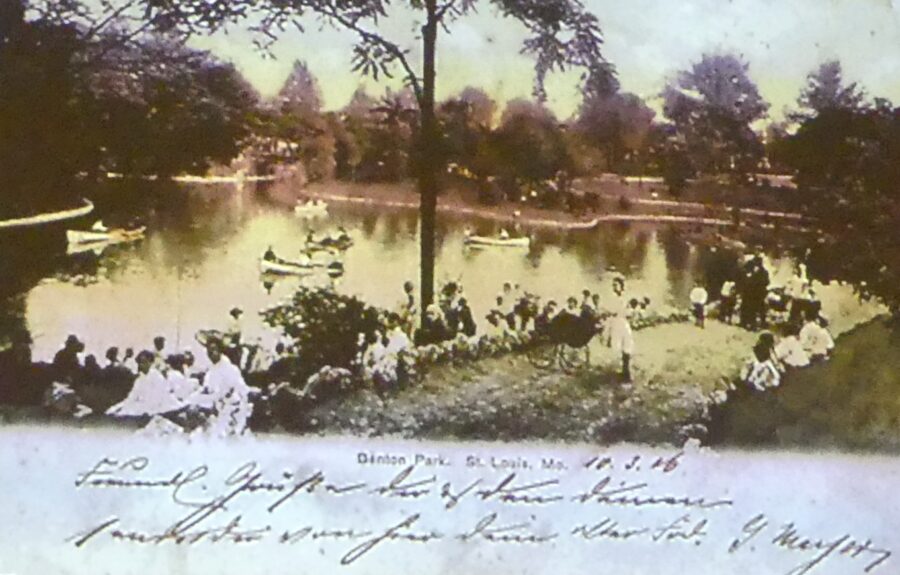

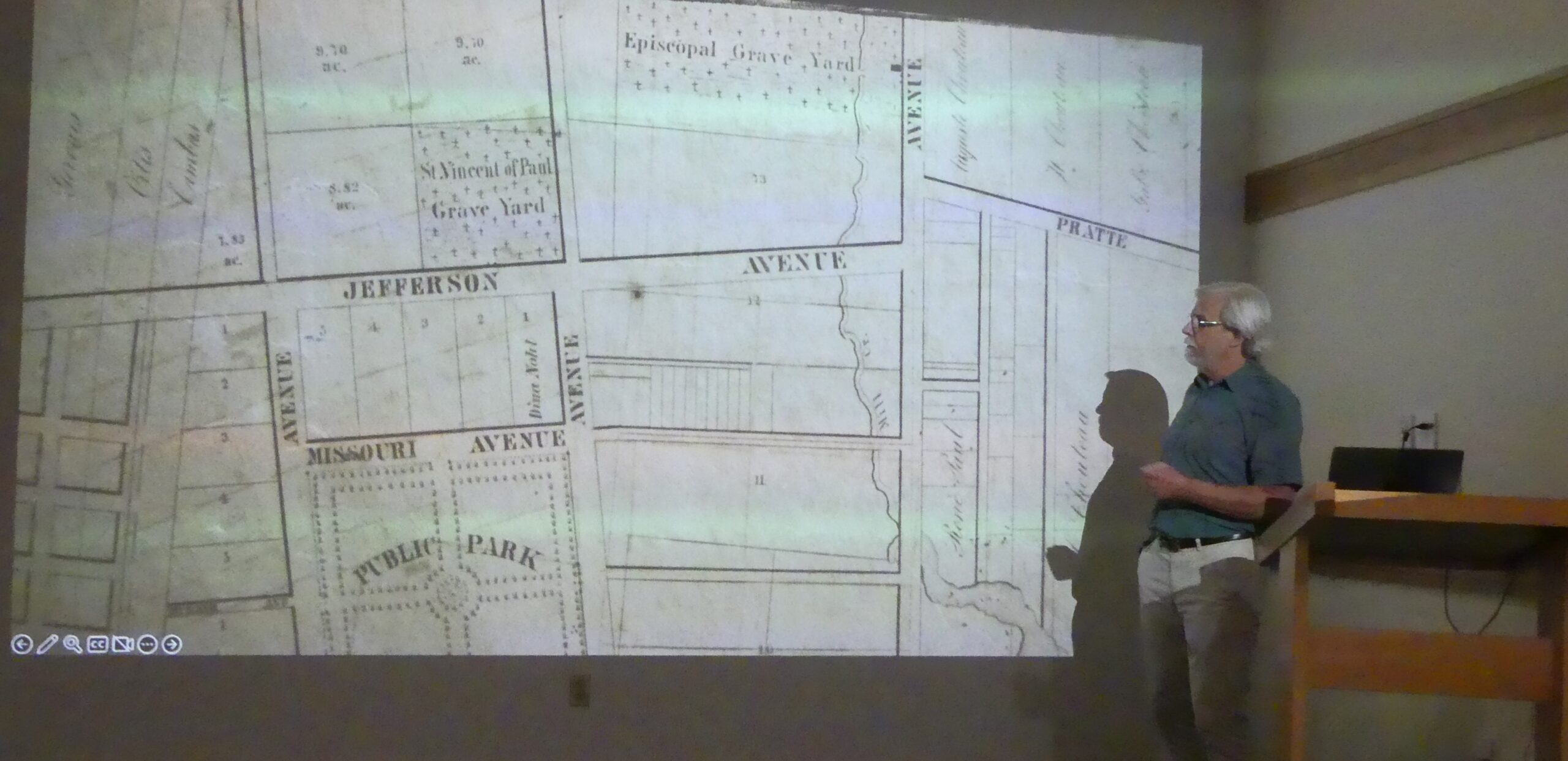
Lawson, Mo. (June 14, 2025) – Jeffery Smith, public historian with the Missouri Humanities Speakers Bureau, recently visited Watkins Woolen Mill to discuss how cemeteries serve as historical markers of racial segregation and social uplift in African American communities.
Beginning in the 1800s, Smith explained that cemeteries reflected systemic racism through legally mandated segregation. Even in Missouri, including cities like St. Louis, burial grounds were organized into sections for families, as well as separate areas for “Negroes and strangers,” he said.
According to Smith, it wasn’t until 1856 that African Americans were legally permitted to be buried in city cemeteries. Still, many were forced to create their own burial grounds, such as the Moses Dickson Cemetery, founded in 1903.
“Just as the United States before the Civil War and after was a segregated place, so too was the city of the dead,” Smith said, noting how cemeteries have long reflected societal inequalities.
But Smith also emphasized that cemeteries don’t just tell a story of separation—they show the ways people worked to create change. He focused on Moses Dickson, who played a key role in promoting social uplift and reshaping how African Americans are remembered, even in burial practices seen today.
Dickson, a lifelong abolitionist, fought for African American education, engaged in political activism, and helped build lasting institutions. Among his many accomplishments, Smith noted, he founded the Order of the Knights and Daughters of Tabor and supported the founding of Lincoln University, a historically Black college.
Smith explained that Dickson believed in building “parallel institutions” for African Americans, places like cemeteries that offered dignity, legacy, and space to preserve their history beyond death.
Although Dickson began his career as a barber on a steamboat, his philosophy was rooted in the ideals of self-improvement and social elevation, similar to those of Booker T. Washington.
“We’re going to educate African Americans… create our parallel institutions, and at some point, we will become so respectable that white folks are going to accept us,” Smith quoted Dickson.
Still, Smith noted, even after the Civil War and emancipation, segregation continued in cemeteries. The graves of those once enslaved were often marked only with a first name and the phrase, “good and faithful servant,” repeating the message that “the contours of servitude continue even in death.”
Through his studies, Smith found that cemeteries offer a deeper context to our understanding of history, often telling stories not found in written documents. He shared that burial sites hold collective memory and can reveal much about cultural practices, segregation, and the social structures of their time.
“Cemeteries and burial places are markers of how we remember ourselves, how we understand our collective history,” he said.
Today, many of these burial grounds are preserved as historic landmarks—offering evidence of African American life and the long struggle toward equality.
For Moses Dickson, his grave represents more than a final resting place. According to Smith, it serves as a lasting document of his life and time. “It stands as a historic site, a document of another period,” Smith concluded.
If you appreciate the value our local journalism brings to the community, please consider making a recurring contribution to the Excelsior Citizen!

In a decision hospital officials call “heartbreaking but necessary,” Excelsior Springs Hospital will be closing its Home Health and Hospice services by the end of April, leaving patients and staff facing an uncertain transition.

Police blotter, Fire & EMS Runs for Excelsior Springs, Missouri, as well as Clay and Ray County Sheriff and Missouri State Highway Patrol reports for April 20, 2022. Excelsior Springs Police Blotter Excelsior Springs Fire & EMS Runs Clay County Sheriff’s Report Ray County Sheriff’s Report No report was submitted. The Ray County Sheriff’s Department…

Excelsior Springs is gearing up for a special occasion—the Silver Prom, an elegant affair tailored specifically for guests aged 60 and older. This event promises to be a delightful afternoon filled with music, dancing, and celebration.

Police Blotter, Fire Calls, and EMS Runs for Excelsior Springs, Missouri, as well as reports from the Clay County Sheriff, Ray County Sheriff, and Missouri State Highway Patrol, for August 31, 2025.
Photo by Jason Cole The Excelsior Springs Police Department has announced significant traffic route changes at the McCleary and 69 Highway intersection due to the ongoing construction of the new QuikTrip store. These changes will affect local traffic starting Monday, June 10, and are expected to last through Friday, June 28. Closure Details: – McCleary…
Police blotter, Fire & EMS Runs for Excelsior Springs, Missouri, and Clay and Ray County Sheriffs’ reports for 02/23/22. Excelsior Springs Police Blotter Excelsior Springs Fire and EMS Runs Clay County Sheriff’s Report Ray County Sheriff’s Report. No report was submitted this week.